

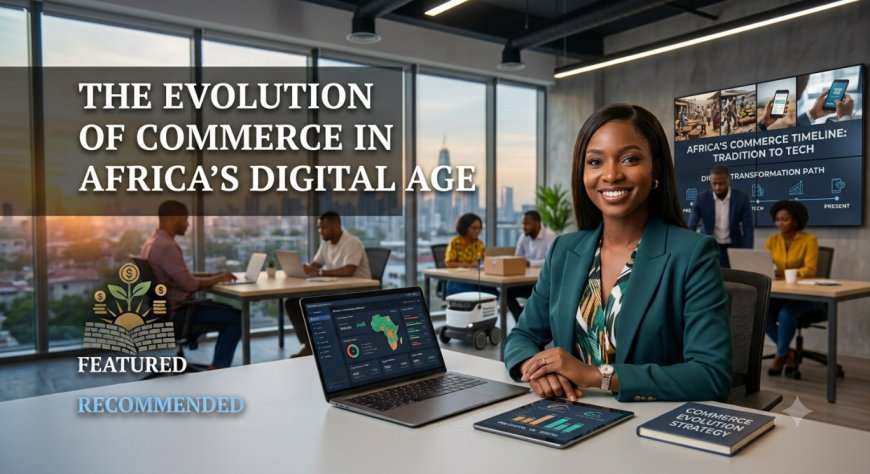
The Evolution of Commerce In Africa's Digital Age
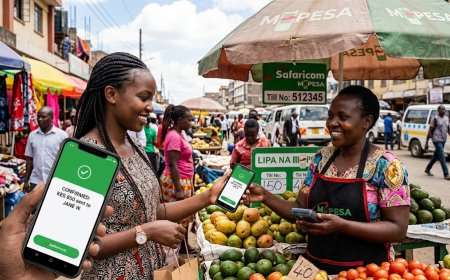
There was a time when commerce in Africa moved at the pace of the marketplace. From the bustling streets of Lagos and Nairobi to the vibrant trading hubs of Accra and Johannesburg, business was conducted face-to-face, cash changed hands, and trust was built through personal relationships developed over years of interaction. The rhythm of trade was shaped by geography, infrastructure
 chijioke


There was a time when commerce in Africa moved at the pace of the marketplace. From the bustling streets of Lagos and Nairobi to the vibrant trading hubs of Accra and Johannesburg, business was conducted face-to-face, cash changed hands, and trust was built through personal relationships developed over years of interaction. The rhythm of trade was shaped by geography, infrastructure, and physical presence. To reach customers, businesses needed a shop, a stall, or a seat in a crowded market.
Today, that reality is changing at an astonishing speed.
Across the continent, a quiet but profound revolution is taking place. A trader in Kano can now sell products to a customer hundreds of kilometers away without ever meeting them. A fashion entrepreneur in Kigali can market her designs to audiences across Africa through a smartphone. A small business owner in Lagos can receive payments, manage inventory, and communicate with customers using digital tools that would have been unimaginable just two decades ago.
This transformation represents one of the most significant economic shifts in Africa's modern history. Commerce is no longer confined by physical borders or traditional business models. It is increasingly powered by technology, connectivity, and innovation.
The story of Africa's digital commerce revolution did not begin with large corporations or government programs. In many ways, it began with the mobile phone.


Unlike many developed economies that experienced a gradual transition from desktop computing to mobile technology, much of Africa leapfrogged directly into the mobile era. As mobile devices became more affordable and network coverage expanded, millions of people gained access to tools that connected them to information, services, and markets in ways previously impossible.
The smartphone quickly became more than a communication device. It evolved into a bank branch, a marketing platform, a storefront, and a business management tool all at once. For entrepreneurs operating in environments where traditional infrastructure was often limited, mobile technology offered a practical and affordable path into the digital economy.
Perhaps nowhere has this transformation been more visible than in financial services. For decades, access to banking remained a challenge for millions of Africans. Opening an account could require lengthy travel, extensive documentation, and interactions with institutions that were often concentrated in urban centers. Digital finance changed that equation.
The rise of fintech companies introduced new ways for individuals and businesses to participate in the economy. Mobile payments, digital wallets, and online financial services brought convenience and accessibility to millions. Transactions that once required physical cash and lengthy processes could now be completed in seconds. For many small business owners, digital payments reduced barriers to growth and opened the door to broader customer bases.
As financial technology expanded, e-commerce naturally followed. Consumers who had grown comfortable making digital payments became increasingly willing to purchase goods and services online. Businesses recognized an opportunity to reach customers far beyond their immediate communities. The result was the emergence of a rapidly growing digital marketplace that continues to reshape consumer behavior across the continent.


What makes Africa's e-commerce story particularly unique is that it has evolved alongside social media. In many parts of the world, online retail grew primarily through dedicated e-commerce websites. In Africa, social platforms often became marketplaces in their own right. Entrepreneurs discovered that they could build brands, engage customers, showcase products, and close sales through social channels with little more than a smartphone and an internet connection.
This democratization of commerce has lowered barriers to entry for countless entrepreneurs. Starting a business no longer requires significant capital investment in physical premises or extensive infrastructure. Creativity, persistence, and digital access have become powerful competitive advantages.
The impact extends beyond individual businesses. Small and medium-sized enterprises, which form the backbone of most African economies, are increasingly benefiting from digital tools that improve efficiency and productivity. Tasks that once consumed valuable time can now be automated or streamlined. Business owners have access to insights, analytics, and management systems that were previously available only to larger organizations.
At the same time, regional trade is becoming more interconnected. Digital platforms are helping businesses discover customers and partners beyond national borders, while growing economic integration across the continent is creating new opportunities for expansion. The vision of a more connected African marketplace is gradually becoming a reality, supported by technology that reduces traditional barriers to trade.
Yet the journey is far from complete.
Despite remarkable progress, challenges remain. Reliable internet access is still uneven in many regions. Infrastructure gaps continue to affect connectivity and logistics. Cybersecurity concerns are becoming increasingly important as digital transactions grow. Digital literacy also remains a critical issue, particularly in rural communities where access to technology may still be limited.
These challenges, however, are not signs of failure. Rather, they represent the next chapter in Africa's digital development story. Every growing economy faces obstacles, and the continent's response to these issues will shape the pace and direction of future progress.
Looking ahead, the future of commerce in Africa appears increasingly digital. Artificial intelligence, blockchain technology, digital banking, automation, and data-driven business models are already beginning to influence how companies operate. As internet penetration deepens and technological innovation accelerates, the opportunities for entrepreneurs and consumers alike are likely to expand dramatically.
What makes this moment particularly significant is that Africa is not merely adopting global digital trends. Increasingly, it is creating its own solutions to its own challenges. Across the continent, innovators are developing technologies designed specifically for local realities, proving that Africa is not simply participating in the digital economy—it is helping to shape it.
The evolution of commerce in Africa's digital age is ultimately a story of adaptation, resilience, and opportunity. It is the story of a continent redefining how business is conducted, how value is exchanged, and how economic growth is achieved. From traditional marketplaces to digital platforms, from cash transactions to mobile payments, and from local trade to global connectivity, Africa's commercial landscape is undergoing a transformation that will influence generations to come.
The digital age has not replaced African commerce; it has expanded its possibilities. And as technology continues to unlock new opportunities, the most exciting chapters of this story may still lie ahead.
Conclusion
Africa's journey into the digital age is transforming commerce in ways that would have been difficult to imagine just a generation ago. What began as a gradual adoption of mobile technology has evolved into a continent-wide commercial revolution, reshaping how businesses operate, how consumers shop, and how value is exchanged.
From the rise of digital payments and e-commerce platforms to the growing influence of social media and financial technology, digital innovation has created opportunities for businesses of every size. Entrepreneurs who were once limited by geography can now reach customers across cities, countries, and even continents. Small businesses are becoming more competitive, consumers are enjoying greater convenience, and entire industries are being redefined by technology.
While challenges such as infrastructure gaps, logistics, and digital literacy remain, the overall direction is clear. Africa is not merely adapting to the global digital economy; it is actively helping to shape it through local innovation, entrepreneurship, and creative problem-solving.
The evolution of commerce in Africa's digital age is ultimately a story of progress and possibility. As connectivity continues to improve and new technologies emerge, the continent stands at the threshold of an economic future filled with unprecedented opportunities. For businesses, investors, and consumers alike, the digital transformation of African commerce is no longer a vision of the future, it is a reality unfolding today.