In the rolling hills of southern Africa lie the stone ruins of a city that once stood as one of the continent’s greatest symbols of power, trade, and civilization. Great Zimbabwe was not just a settlement of stone walls and towers, it was the political and economic heart of a thriving African kingdom that flourished between the 11th and 15th centuries.
For centuries, outsiders underestimated the sophistication of African civilizations, often refusing to believe that Africans themselves could have built monumental cities like Great Zimbabwe. Yet archaeology, oral history, and historical research tell a very different story. Great Zimbabwe was a center of wealth, architecture, trade, and leadership long before European colonial expansion reached southern Africa.
Its rise was not accidental. The city became powerful because of geography, trade networks, skilled craftsmanship, organized leadership, and a strong cultural identity that united its people. Even today, its towering stone walls remain one of the greatest achievements in African history.
The Meaning Behind Great Zimbabwe
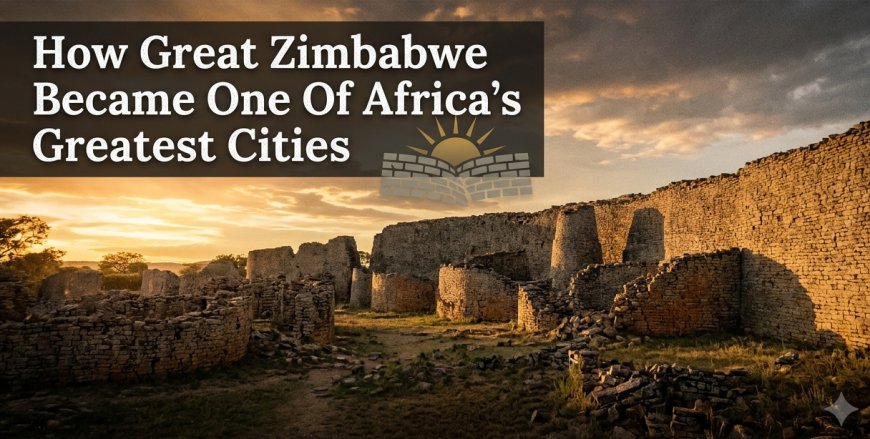
The name “Zimbabwe” comes from the Shona phrase dzimba dza mabwe, meaning “houses of stone.” The city earned this name because of its extraordinary dry-stone architecture — massive granite structures built without mortar that have survived for centuries.
At its peak, Great Zimbabwe was home to an estimated 10,000 to 20,000 people, making it one of the largest urban centers in sub-Saharan Africa during the medieval era. The city served as the capital of the Kingdom of Zimbabwe, a powerful state that controlled large parts of present-day Zimbabwe and surrounding regions.
Its influence stretched far beyond its walls, connecting inland Africa to the Indian Ocean trading world.
A Strategic Location That Encouraged Growth
One of the major reasons Great Zimbabwe became successful was its strategic location. The city was built on a granite plateau surrounded by fertile land suitable for farming and cattle rearing. Water sources nearby supported agriculture and daily life, while the rocky terrain provided natural protection from enemies.
More importantly, Great Zimbabwe stood near important trade routes linking southern Africa to coastal ports along the Indian Ocean. Traders moved valuable goods such as gold, ivory, copper, and animal skins from the African interior to coastal cities where merchants from Arabia, Persia, India, and later China exchanged luxury goods.
This position transformed Great Zimbabwe into a commercial powerhouse.
Wealth Built on Gold and Trade
Trade was the engine behind Great Zimbabwe’s rise. The kingdom controlled access to gold mines in the region, and gold quickly became its most valuable export. Merchants traveled long distances to obtain this precious metal, which was highly desired in international markets.
Archaeologists have discovered Chinese porcelain, Persian glassware, and Arab coins at the site — evidence that Great Zimbabwe participated in global trade networks centuries before modern globalization.
The city did not simply export raw materials. Skilled local artisans produced pottery, iron tools, jewelry, woven textiles, and soapstone carvings that reflected both wealth and cultural sophistication. These industries supported economic growth and helped create a prosperous urban society.
Cattle ownership also played a major role in the economy. In many southern African societies, cattle symbolized wealth, power, and social status. The rulers of Great Zimbabwe controlled enormous herds, strengthening both their economic and political authority.
Extraordinary Architecture and Engineering
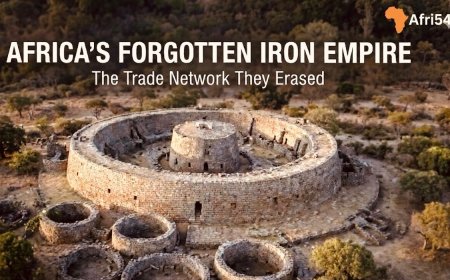
Perhaps the most famous feature of Great Zimbabwe is its architecture. The city’s builders created enormous stone structures using carefully shaped granite blocks stacked without mortar. The precision and durability of these walls continue to impress historians and engineers today.
The most iconic structure is the Great Enclosure, a massive circular wall that reaches over 11 meters in height in some sections. Inside stands a mysterious conical tower whose exact purpose remains debated by scholars. Some believe it symbolized royal authority or spiritual power.
The city also included residential areas, ceremonial spaces, storage zones, and elite compounds, suggesting a highly organized urban environment.
Unlike many medieval cities elsewhere in the world, Great Zimbabwe’s architecture blended naturally with the surrounding landscape. Builders incorporated granite boulders and hills into the design of the city, creating a unique architectural identity deeply connected to the environment.
Strong Leadership and Political Organization
Great cities rarely emerge without effective leadership, and Great Zimbabwe was no exception. The city served as the seat of powerful kings who controlled trade, agriculture, taxation, and regional politics.
The ruling elite used wealth from trade to maintain influence and expand their authority over neighboring territories. This centralized power allowed the kingdom to manage resources, organize labor, and sustain large construction projects.
Religion and spirituality also played an important role in governance. Leaders were often seen as both political and spiritual figures, helping maintain unity among the population. Sacred rituals, ancestral worship, and ceremonial traditions strengthened social cohesion within the kingdom.
This combination of political organization and cultural identity helped Great Zimbabwe remain stable for centuries.
A Cultural Symbol of African Achievement
Great Zimbabwe represented more than economic success. It became a symbol of African creativity, innovation, and independence.
For generations, colonial historians attempted to credit the city’s construction to foreign civilizations because they refused to believe Africans could have built such advanced structures. These false theories have long been discredited. Today, scholars widely recognize that the ancestors of the Shona people built and managed the city.
The rediscovery of this truth became deeply important during the struggle against colonialism in southern Africa. When Zimbabwe gained independence in 1980, the country adopted the name “Zimbabwe” to honor this remarkable civilization and reclaim its historical legacy.
The famous Zimbabwe Bird, discovered among the ruins, also became a national symbol and appears on the country’s flag and currency.
Why Great Zimbabwe Declined
Despite its greatness, the city eventually declined during the 15th century. Historians believe several factors contributed to this fall.
Population growth may have placed pressure on natural resources such as grazing land, forests, and water supplies. Trade routes also shifted over time, reducing the city’s economic dominance. Political fragmentation and competition from emerging regional states may have further weakened the kingdom.
Rather than disappearing entirely, many inhabitants likely migrated to establish new centers of power elsewhere in southern Africa.
Even in decline, however, Great Zimbabwe’s influence continued to shape regional politics, culture, and trade for generations.
The Lasting Legacy of Great Zimbabwe
Today, Great Zimbabwe remains one of Africa’s most important archaeological and historical sites. It stands as proof that advanced urban societies, global trade networks, and monumental architecture flourished in Africa long before colonial rule.
The ruins attract historians, tourists, and scholars from around the world who come to witness the remains of a civilization that once dominated southern Africa.
More importantly, Great Zimbabwe challenges outdated narratives about African history. Its story reminds the world that Africa has always been home to powerful kingdoms, skilled engineers, thriving economies, and remarkable cities.
Long before modern skyscrapers and global corporations, Great Zimbabwe rose from stone, trade, and ambition to become one of Africa’s greatest cities — a legacy that still inspires pride across the continent today.



 chijioke