

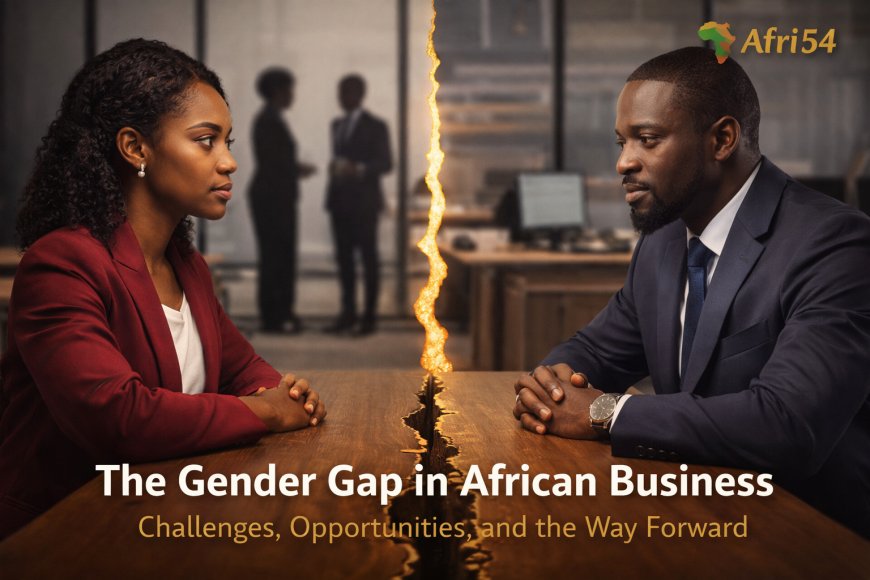
The Gender Gap in African Business: Challenges, Opportunities, and the Way Forward
Africa’s business landscape is evolving rapidly, driven by innovation, entrepreneurship, and a growing youth population. Across the continent, women are playing an increasingly important role in shaping economies, launching startups, leading organizations, and contributing to sustainable development. However, despite these strides, a significant gender gap remains in African business.
 chijioke


Introduction
Africa’s business landscape is evolving rapidly, driven by innovation, entrepreneurship, and a growing youth population. Across the continent, women are playing an increasingly important role in shaping economies, launching startups, leading organizations, and contributing to sustainable development. However, despite these strides, a significant gender gap remains in African business. Women continue to face structural, cultural, and financial barriers that limit their full participation in economic activities.
Addressing the gender gap in African business is not only a matter of equality but also a critical economic imperative. Studies consistently show that economies grow faster and become more resilient when women participate fully in business and leadership. Closing the gender gap could unlock billions of dollars in economic value, create jobs, and improve social outcomes across the continent.
This article explores the key challenges contributing to the gender gap in African business, highlights emerging opportunities, and outlines practical steps toward a more inclusive and equitable business environment.
Understanding the Gender Gap in African Business
The gender gap in African business refers to the unequal access to resources, opportunities, leadership positions, and financial support between men and women in the business sector. While Africa has one of the highest rates of female entrepreneurship in the world, many women-owned businesses remain small, informal, and underfunded.
Women are often concentrated in low-income sectors such as retail, agriculture, and small-scale services, while men dominate high-growth industries like technology, manufacturing, and finance. Additionally, women are underrepresented in executive roles, boardrooms, and decision-making positions within major corporations.


This gap is not due to a lack of talent or ambition but rather systemic barriers that hinder women's ability to scale and sustain businesses.
Key Challenges Facing Women in African Business
1. Limited Access to Finance
One of the most significant challenges women face in African business is access to capital. Many financial institutions require collateral such as land or property, which women often do not legally own due to cultural and inheritance restrictions.
As a result, women entrepreneurs rely heavily on personal savings, family support, or informal lending systems. This limits their ability to expand operations, invest in technology, or enter competitive markets.
Without adequate financing, many women-owned businesses remain small and struggle to survive in the long term.
2. Cultural and Social Barriers
In many African societies, traditional gender roles still influence business participation. Women are often expected to prioritize family responsibilities over career or business development.


These social expectations can restrict mobility, networking opportunities, and leadership participation. In some cases, women face resistance when attempting to lead organizations or enter male-dominated industries.
The lack of societal support can discourage women from pursuing business opportunities or scaling their enterprises.
3. Limited Access to Education and Business Training
Although education levels have improved across Africa, many women still lack access to quality business education, financial literacy, and leadership training.
This gap affects their ability to manage complex business operations, secure funding, and compete in global markets. Additionally, limited exposure to mentorship and professional networks reduces opportunities for growth and innovation.
Building skills and knowledge remains a key factor in closing the gender gap.
4. Weak Policy Implementation
Many African countries have policies promoting gender equality in business, but implementation remains inconsistent.
Legal frameworks supporting women's rights, access to credit, and workplace equality often exist on paper but are not fully enforced. Bureaucratic processes, corruption, and lack of monitoring reduce the effectiveness of these policies.
Stronger enforcement and accountability mechanisms are needed to ensure that gender equality policies translate into real opportunities.
5. Limited Representation in Leadership
Women are still underrepresented in corporate leadership, government economic institutions, and investment decision-making bodies.
This lack of representation means that women's perspectives are often missing in policy development, investment strategies, and business planning.
Increasing women's participation in leadership roles is essential for creating inclusive economic systems.
Emerging Opportunities for Women in African Business
Despite these challenges, several opportunities are helping to close the gender gap and empower women entrepreneurs across Africa.
1. Growth of Digital and Technology Platforms
Digital technology is creating new opportunities for women to start and grow businesses. E-commerce, mobile banking, and online marketplaces allow women to operate businesses with fewer physical barriers.
Technology reduces the need for traditional infrastructure and enables access to customers, training, and financial services.
Women entrepreneurs are increasingly using digital tools to reach international markets and scale their operations.
2. Rise of Women-Focused Investment Funds
Many investors and development organizations are now prioritizing women-led businesses.
Women-focused venture capital funds, grants, and microfinance programs are helping female entrepreneurs access funding and mentorship. These initiatives are designed to bridge the financing gap and support business growth.
Such targeted investment programs are gradually transforming the business environment.
3. Government and Institutional Support
Several African governments and regional organizations are promoting gender-inclusive economic policies.
Programs supporting women-owned small and medium enterprises (SMEs), business training initiatives, and financial inclusion strategies are gaining momentum.
Public-private partnerships are also playing a key role in empowering women entrepreneurs and strengthening business ecosystems.
4. Growing Awareness and Advocacy
There is increasing awareness about gender equality in African business.
Non-governmental organizations, business leaders, and international institutions are advocating for equal opportunities and inclusive economic growth.
This growing awareness is encouraging policy reforms, corporate diversity initiatives, and community support for women entrepreneurs.
The Way Forward
Closing the gender gap in African business requires a coordinated effort from governments, financial institutions, private sector leaders, and society at large.
1. Improve Access to Finance
Financial institutions should develop gender-sensitive lending policies and flexible collateral requirements.
Microfinance, digital lending platforms, and women-focused investment programs can help increase access to capital.
Governments can also provide guarantees and incentives to encourage banks to support women entrepreneurs.
2. Strengthen Education and Capacity Building
Investing in women's education, entrepreneurship training, and leadership development is essential.
Business incubators, mentorship programs, and professional networks can equip women with the skills needed to grow successful enterprises.
Training in financial literacy, digital tools, and strategic management should be prioritized.
3. Promote Inclusive Policies and Enforcement
Governments must ensure that gender equality laws and policies are effectively implemented.
Monitoring systems, accountability measures, and legal protections should be strengthened to support women's participation in business.
Inclusive policies should also encourage women's representation in leadership and decision-making roles.
4. Encourage Cultural and Social Change
Communities and organizations must challenge stereotypes and promote gender equality.
Supporting women's leadership, encouraging shared family responsibilities, and creating inclusive workplaces can transform societal attitudes.
Media and education systems also play a critical role in shaping positive perceptions of women in business.
5. Foster Partnerships and Collaboration
Collaboration between governments, private sector organizations, NGOs, and international institutions is key to closing the gender gap.
Joint initiatives, funding programs, and innovation hubs can create sustainable solutions that empower women entrepreneurs across Africa.
Strong partnerships will accelerate progress and ensure long-term impact.
Conclusion
The gender gap in African business remains a significant challenge, but it also presents a powerful opportunity for economic transformation. Women entrepreneurs and leaders have the potential to drive innovation, create jobs, and strengthen economies across the continent.
By improving access to finance, investing in education, enforcing inclusive policies, and promoting cultural change, Africa can build a more equitable and prosperous business environment.
Closing the gender gap is not just about fairness; it is about unlocking Africa’s full economic potential and creating a future where both men and women can contribute equally to business and development.
The path forward requires commitment, collaboration, and bold action, but the rewards will be transformative for Africa’s economy and society as a whole.