

The Psychology Behind Great Brands: Navigating Identity, Emotion, and the African Consumer Ecosystem
In today's marketplace, consumers are exposed to thousands of commercial messages every day. Whether scrolling through social media, walking into a shopping mall, or browsing an online marketplace, people are constantly making decisions about which brands deserve their attention and trust. Yet, despite the overwhelming number of businesses competing for visibility, only a select few manage to occupy a permanent place in the minds of consumers.
 chijioke
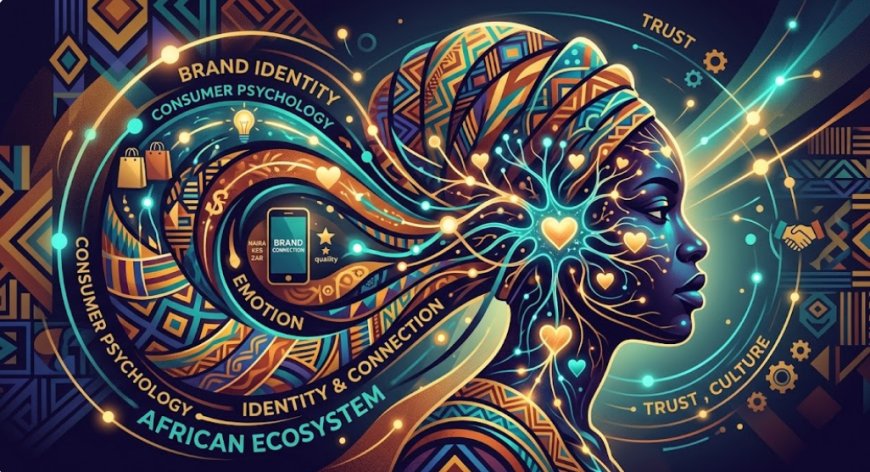


"People do not simply buy products; they buy perceptions, emotions, identities, and experiences." This simple truth sits at the heart of every successful brand.
In today's marketplace, consumers are exposed to thousands of commercial messages every day. Whether scrolling through social media, walking into a shopping mall, or browsing an online marketplace, people are constantly making decisions about which brands deserve their attention and trust. Yet, despite the overwhelming number of businesses competing for visibility, only a select few manage to occupy a permanent place in the minds of consumers.
This raises an important question: What makes certain brands unforgettable while others struggle to remain relevant?
Contrary to popular belief, great brands are rarely built on superior products alone. Product quality may attract first-time customers, but psychology determines whether they return. Behind every iconic brand lies a sophisticated understanding of human behaviour—how people think, feel, make decisions, and form emotional attachments.
Branding, therefore, is not merely a marketing function. It is an exercise in behavioural science. Businesses that understand the psychology behind consumer decision-making create stronger emotional connections, command greater customer loyalty, and remain resilient even in highly competitive markets.


Branding Begins in the Mind, Not the Marketplace
One of the biggest misconceptions about branding is that it revolves around logos, colours, fonts, or advertising campaigns. While these elements contribute to a brand's identity, they are not the brand itself.
A brand exists in the mind of the consumer. It is the collection of beliefs, emotions, memories, expectations, and experiences that people associate with a business.
When consumers hear the name of a company, their brains immediately retrieve stored impressions formed through previous interactions, recommendations, media exposure, customer service experiences, and emotional associations. These mental shortcuts influence purchasing decisions long before customers consciously evaluate price or product specifications.
This explains why two companies offering nearly identical products can achieve dramatically different outcomes. One becomes the preferred choice, while the other competes solely on price.
The difference lies in perception.


The Emotional Brain Makes the First Decision
Although consumers often believe they make rational purchasing decisions, behavioural psychology suggests otherwise.
Research in neuroscience has consistently demonstrated that emotions play a central role in decision-making. People experience an emotional reaction first and subsequently use logic to justify that decision.
This explains why customers frequently choose a familiar café over a cheaper alternative, remain loyal to particular smartphone brands despite higher prices, or continue supporting businesses that consistently make them feel valued.
Great brands understand that customers rarely purchase products for their functional value alone.
A luxury wristwatch tells time, but it also communicates achievement.
A travel agency sells flights, but it also sells anticipation, adventure, security, and memorable experiences.
A skincare company sells confidence just as much as it sells cosmetics.
The most effective brands identify the emotional outcome customers desire and position themselves as the bridge between aspiration and reality.
Trust Is the Most Valuable Brand Asset
In an era where consumers are increasingly cautious about misinformation, counterfeit products, and poor customer experiences, trust has become one of the most powerful competitive advantages.
Psychologically, trust reduces uncertainty.
Every purchase involves risk. Customers wonder whether a product will meet expectations, whether the company will honour its promises, or whether their money will be well spent.
Strong brands minimise these uncertainties through consistency.
Consistency in product quality.
Consistency in customer service.
Consistency in communication.
Consistency in delivering on promises.
Over time, repeated positive experiences create what psychologists describe as cognitive certainty—a mental state in which consumers no longer question whether a brand can be trusted.
Once trust is established, customers become significantly less sensitive to price fluctuations and competitive alternatives.
Familiarity Creates Preference
One of the most fascinating principles in psychology is the mere exposure effect, which suggests that people naturally develop a preference for things they encounter repeatedly.
This phenomenon explains why brands that consistently appear in consumers' daily lives often enjoy higher levels of recognition and trust.
Every blog article, social media post, email newsletter, podcast appearance, customer testimonial, and community initiative contributes to this familiarity.
Importantly, familiarity should never be confused with excessive promotion.
Consumers rarely appreciate brands that constantly interrupt them with sales messages. Instead, they respond positively to businesses that consistently provide value, education, entertainment, or meaningful engagement.
Visibility creates familiarity.
Familiarity creates comfort.
Comfort increases trust.
Trust influences purchasing behaviour.
The Power of Identity in Consumer Behaviour
Human beings are inherently social creatures who seek belonging and self-expression.
Consequently, many purchasing decisions are less about functionality and more about identity.
People choose brands that reflect who they are—or who they aspire to become.
Some consumers purchase environmentally sustainable products because they value responsibility.
Others invest in premium brands because they wish to communicate success and sophistication.
Still others support local businesses because they identify with community development and national pride.
The strongest brands recognise that they are not merely selling products; they are reinforcing identities.
When customers begin describing themselves through a brand—rather than simply purchasing from it—the relationship evolves from transactional to emotional.
This represents one of the highest levels of brand loyalty.
Stories Create Stronger Memories Than Statistics
The human brain processes stories differently from isolated facts.
Stories stimulate imagination, evoke emotion, and activate multiple regions of the brain simultaneously. As a result, they are significantly easier to remember.
Businesses often make the mistake of communicating through facts alone:
"We've been operating for ten years."
"We have experienced professionals."
"We offer quality services."
While these statements may be true, they rarely create lasting impressions.
Stories, however, transform information into experience.
The founder's journey.
A customer's transformation.
The problem that inspired the business.
The community impact achieved over time.
These narratives allow audiences to connect emotionally with the people behind the brand rather than merely evaluating products or services.
Social Proof Reduces Perceived Risk
Consumers often look to others when making decisions, especially in situations involving uncertainty.
This behavioural tendency explains why testimonials, customer reviews, referrals, endorsements, and user-generated content significantly influence purchasing decisions.
When people observe others having positive experiences with a brand, perceived risk decreases.
Trust increases.
Confidence grows.
Businesses should therefore view customer satisfaction not merely as an operational objective but as a marketing strategy.
Every satisfied customer represents potential evidence that reassures future buyers.
Simplicity Builds Confidence
Complexity creates hesitation.
Clarity inspires action.
Psychologists have long observed that people are naturally drawn toward information that is easier to process—a concept often referred to as cognitive fluency.
Brands that communicate their value proposition clearly are perceived as more credible and trustworthy.
Customers should never struggle to understand what a business offers, who it serves, or why it exists.
Whether designing a website, writing advertising copy, or creating social media content, simplicity should remain a strategic priority.
The easier a message is to understand, the easier it becomes to remember.
Consistency Shapes Reputation
Brand reputation is not built through isolated campaigns.
It is formed through repeated experiences over time.
Every customer interaction contributes to the overall perception of a business—from its visual identity and website to customer service responses, product packaging, billing processes, and after-sales support.
Consistency creates predictability.
Predictability creates confidence.
Confidence strengthens loyalty.
This is why successful organisations establish comprehensive brand guidelines, customer service standards, and communication frameworks that ensure every interaction reinforces the same values.
Authenticity Is the New Competitive Advantage
Modern consumers are increasingly sceptical of exaggerated marketing claims.
They value transparency over perfection.
Businesses that openly acknowledge mistakes, communicate honestly, demonstrate genuine concern for customers, and remain true to their values often outperform competitors that rely solely on polished advertising.
Authenticity humanises brands.
It transforms companies from distant commercial entities into organisations that customers can relate to and trust.
In today's digital economy, where consumers have immediate access to reviews, discussions, and competing alternatives, authenticity has become not just desirable but essential.
Lessons for African Businesses
Across Africa, entrepreneurship is expanding at an unprecedented pace. New businesses emerge daily across industries ranging from fintech and agriculture to healthcare, education, logistics, fashion, tourism, and e-commerce.
Yet many businesses remain heavily focused on operational excellence while overlooking brand psychology.
Competitive advantage is no longer determined solely by product quality or pricing.
Customers increasingly choose businesses that communicate clearly, demonstrate consistency, inspire confidence, and build emotional connections.
African brands that invest in understanding consumer psychology will not only attract customers but cultivate advocates—people who willingly recommend, defend, and remain loyal to the brand even when competitors emerge.
In rapidly evolving markets, this kind of loyalty is invaluable.
Conclusion
The world's most admired brands did not become influential simply because they offered exceptional products. They succeeded because they understood people.
They recognised that purchasing decisions are influenced by emotion before logic, trust before transaction, identity before functionality, and experience before price.
Ultimately, branding is less about convincing people to buy and more about creating reasons for them to believe.
Businesses that master the psychology of branding move beyond selling products and services. They shape perceptions, build relationships, and earn enduring places in the minds and hearts of consumers.
In an increasingly competitive marketplace, that may be the greatest competitive advantage of all.