

The Island of Meroë (Sudan) – Ancient Nubian Pyramids and Royal Cemetery
Discover the Island of Meroë in Sudan, home to ancient Nubian pyramids and a royal cemetery of the Kushite kings and queens. A UNESCO World Heritage Site showcasing Africa’s forgotten empire.
 Afri54
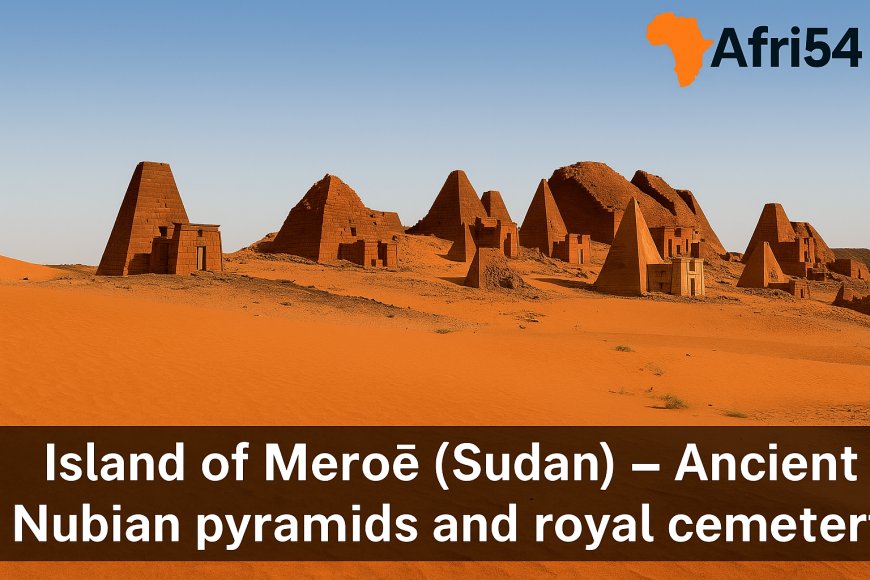


Deep in the deserts of Sudan lies one of Africa’s most fascinating and lesser-known treasures—the Island of Meroë. Often overshadowed by the grandeur of Egypt’s pyramids, Meroë stands as a testament to the power and cultural brilliance of the ancient Kingdom of Kush, a Nubian civilization that thrived along the Nile River for centuries.
A Royal Necropolis in the Desert
The Island of Meroë is not a true island, but rather a desert site along the east bank of the Nile. It became the royal cemetery of the Kushite rulers, featuring over 200 pyramids, many of which are remarkably preserved. Unlike the colossal pyramids of Giza, the Nubian pyramids at Meroë are smaller, narrower, and often steeper in design, creating a unique architectural silhouette against the sands.
Each pyramid once marked the burial site of kings, queens, and powerful nobles, making Meroë the spiritual and political heart of the Kushite dynasty. Inside these tombs, archaeologists have uncovered rich artifacts—gold jewelry, pottery, and inscriptions—that reveal the wealth and traditions of this African empire.
The Kingdom of Kush: A Rival to Egypt
Meroë flourished between the 8th century BCE and the 4th century CE, during a period when the Kushite kingdom rivaled Egypt and even ruled it as the 25th Dynasty of Pharaohs. The site reflects a fusion of Egyptian, Greek, and indigenous African influences. Hieroglyphics appear alongside Meroitic script—one of the world’s oldest written languages yet to be fully deciphered.
The pyramids also highlight the advanced craftsmanship of Nubian builders. While looters in later centuries stripped many tombs of their treasures, the architecture still stands as a proud reminder of the Kushites’ legacy.


A UNESCO World Heritage Site
Recognized as a UNESCO World Heritage Site, the Island of Meroë continues to draw travelers, historians, and archaeologists alike. Unlike the crowded tourist sites in Egypt, Meroë offers a serene, almost mystical experience. Standing amidst the sand-swept pyramids, one feels transported back to a forgotten age of African royalty.
Why Meroë Matters Today
The Island of Meroë challenges long-standing narratives that place ancient Africa solely in Egypt’s shadow. It reminds us that Africa was home to multiple great civilizations, each contributing to humanity’s cultural and architectural heritage. For Sudan, Meroë is not just a site of ruins, but a living emblem of pride, resilience, and identity.
Final Thoughts
The pyramids of Meroë are more than monuments—they are symbols of a kingdom that thrived in Africa’s heartland, influencing cultures far beyond the Nile. Visiting the site today offers not only a glimpse into ancient Nubia but also a chance to honor Africa’s enduring role in shaping world history.
Have you listed your business on Afri54?
Afri54 exists to solve a fundamental challenge faced by millions of African businesses: lack of visibility. Whether you're an automobile part seller in Lagos, a local attire manufacturer in Kigali, a coffee exporter in Addis Ababa, or a mobile phone supplier in Accra, you deserve to be seen. Join now