

Mansa Musa: How Africa’s Richest Man Built a Golden Empire on Gold, Salt, and Smart Trade Networks (And Why His Legendary 1324 Pilgrimage Still Inspires African Entrepreneurs Today)
Imagine a golden caravan stretching across the Sahara, camels moving in perfect rhythm under the burning sun, each carrying bags of gold so heavy they needed handlers to manage them.
 chijioke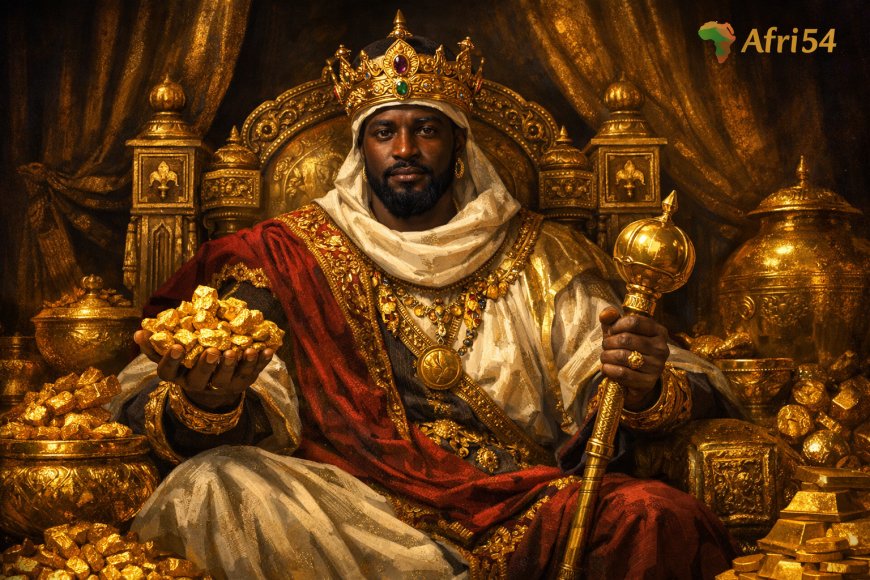


Introduction: The Journey That Made the World Stop and Watch
Imagine a golden caravan stretching across the Sahara, camels moving in perfect rhythm under the burning sun, each carrying bags of gold so heavy they needed handlers to manage them. Thousands of attendants marched alongside, dressed in fine silk and carrying polished staffs. Musicians played. Scholars traveled. Soldiers protected the convoy. And at the center of it all was a quiet but powerful ruler — a king whose wealth would soon shake the global economy.
When Mansa Musa, emperor of the Mali Empire, embarked on his famous pilgrimage to Mecca in 1324, the world had never seen anything like it. As his caravan passed through Cairo, he distributed so much gold to the people that the price of gold crashed and remained depressed for more than a decade. Markets shifted. Economies felt the impact. Trade networks adjusted. Africa had made a global statement — not through war, but through economic power and strategic wealth.
Today, Mansa Musa is widely regarded as the richest person in history, with modern estimates placing his wealth between $400 billion and $450 billion in today’s terms. But beyond the numbers, his story is not just about riches. It is about vision, trade intelligence, and long-term thinking — a blueprint that still speaks directly to African entrepreneurs in 2026.
Mansa Musa did not just accumulate wealth. He built systems, institutions, and networks that transformed an entire region into one of the most powerful economic centers in the medieval world. And in many ways, his approach mirrors the kind of thinking Africa needs today: strategic trade, strong institutions, and bold leadership.
The Rise of an Empire
Mansa Musa came to power in 1312 and ruled until 1337, during a period when the Mali Empire was already growing. But under his leadership, it expanded into one of the largest and most influential empires in African history.


His greatest strength was not military conquest alone — it was economic strategy.
The Mali Empire controlled the most valuable commodity of the time: gold. Southern regions like Bambuk and Bure produced enormous quantities of gold, making Mali one of the world’s main gold suppliers. At the same time, the Sahara provided another critical resource: salt, especially from the mines of Taghaza. Salt was not just seasoning; it was essential for food preservation and survival, making it as valuable as gold in many regions.
Mansa Musa understood something many leaders missed — wealth flows through networks.
He built strong control over the trans-Saharan trade routes, ensuring that caravans moving between West Africa and North Africa passed through Mali-controlled territories. Traders paid taxes. Goods passed through regulated markets. Caravans received protection. The empire became the center of commerce between Africa, the Middle East, and Europe.
Key cities like Timbuktu, Gao, and Djenné became vibrant trade hubs, attracting merchants, scholars, and investors from across the world.


[Insert Image: Map of trans-Saharan trade routes under the Mali Empire]
This was not accidental. It was smart economic governance.
Instead of hoarding resources, Mansa Musa built systems that allowed trade to flourish. Markets were organized. Trade routes were secured. Infrastructure supported commerce. The empire became a well-connected economic engine.
For today’s African entrepreneur, this is a powerful reminder: success is not just about what you produce — it’s about how you connect it to markets.
Mansa Musa mastered supply chains centuries before modern logistics existed.
The Pilgrimage That Shook the World
In 1324, Mansa Musa set out on a pilgrimage to Mecca — the Hajj, one of the most important journeys in the Islamic world.
But this was not an ordinary pilgrimage.
His entourage reportedly included up to 60,000 people, including soldiers, officials, servants, and scholars. Between 80 and 100 camels carried gold, each loaded with hundreds of pounds of precious metal. Every member of the royal group wore fine clothing and carried resources that reflected the empire’s immense wealth.
[Insert Image: Illustration of camel caravans on the trans-Saharan route]
When the caravan arrived in Cairo, Mansa Musa’s generosity became legendary.
He gave gold to the poor. He donated to leaders. He supported markets. He distributed wealth freely. The result was unexpected: so much gold entered Cairo’s economy that its value dropped significantly. Historical accounts suggest the effects lasted 10 to 12 years.
This was one of the earliest recorded examples of how large-scale financial movement could affect global markets.
But something even more important happened.
The world noticed Africa.
News of the wealthy emperor spread across North Africa, Europe, and the Middle East. Traders began talking. Scholars documented the story. Cartographers included Mali in global maps.
In 1375, Mansa Musa appeared in the Catalan Atlas, one of the most famous medieval maps, shown sitting on a golden throne holding a nugget of gold.
[Insert Image: Mansa Musa depiction from the 1375 Catalan Atlas]
This moment placed Mali on the global stage.
It was more than a religious journey — it was a strategic branding moment for Africa.
Mansa Musa showed the world that Africa was not a remote land of mystery, but a center of wealth, trade, and civilization.
For modern founders, this is the power of visibility. When you show your strength to the world, opportunities follow.
Investing Wealth into Lasting Legacy
Many rulers accumulate wealth.
Few turn it into legacy.
Mansa Musa understood that gold alone would not sustain an empire. Knowledge, infrastructure, and institutions would.
After returning from his pilgrimage, he invested heavily in Timbuktu, transforming it into one of the greatest intellectual centers of the medieval world.
The Sankore Mosque and University became a major center of learning, attracting scholars and students from across Africa and the Islamic world. Thousands of students studied mathematics, astronomy, law, medicine, and literature. Libraries filled with manuscripts. Knowledge became a key part of the empire’s identity.
This was not just religious development — it was economic and intellectual investment.
[Insert Image: Sankore Mosque and Timbuktu learning center]
Mansa Musa also supported the construction of mosques and infrastructure, including the Great Mosque of Djenné, which became an architectural and cultural landmark.
Trade wealth was transformed into education.
Gold became knowledge.
Resources became institutions.
And institutions created long-term influence.
This is perhaps the most powerful lesson of all.
Short-term profit builds comfort.
Long-term investment builds civilization.
Mansa Musa chose civilization.
5 Powerful Lessons for Today’s African Entrepreneurs (Afri54 Edition)
1. Master Supply Chains and Cross-Border Networks
Mansa Musa controlled trade routes that connected regions and markets across continents.
Today, Africa has AfCFTA, digital trade platforms, and regional partnerships. The opportunity is bigger than ever.
If you can connect products across borders — logistics, e-commerce, manufacturing, agriculture, or services — you are building modern trade empires.
Think beyond your country.
Think Africa.
2. Leverage Natural Resources Intelligently
Gold and salt were Mali’s strategic assets, but it was how they were managed that created wealth.
Africa today has oil, lithium, cocoa, tech talent, farmland, and creative industries.
The key question is not what Africa has — it is how Africa uses it.
Smart processing, smart partnerships, and smart trade can turn resources into sustainable wealth.
Mansa Musa did not just extract resources.
He monetized them strategically.
3. Invest in People, Knowledge, and Talent
Timbuktu became powerful because of scholars and students.
Knowledge created influence.
In 2026, the same principle applies.
If you invest in training, education, mentorship, and innovation, your business becomes stronger.
Build teams.
Train people.
Support learning.
Knowledge compounds faster than money.
4. Use Generosity and Relationships as Strategy
Mansa Musa’s generosity in Cairo created influence and goodwill across regions.
Relationships opened doors.
In business today, generosity means partnerships, collaboration, and community building.
Support other founders.
Build networks.
Share opportunities.
Strong relationships create stronger businesses.
And stronger businesses build stronger Africa.
5. Build Long-Term Empires, Not Quick Wins
Mansa Musa did not think in quarters or short-term profits.
He thought in generations.
He built cities, institutions, and trade systems that lasted long after his reign.
This is the mindset African entrepreneurs need today.
Build businesses that will still exist in 20, 30, or 50 years.
Think legacy.
Think impact.
Think empire.
Conclusion: Africa Has Always Built Greatness
Mansa Musa’s story reminds us of something powerful: Africa has always been a center of innovation, trade, and economic strength.
Long before modern corporations and global markets, African leaders were building supply chains, managing economies, investing in knowledge, and shaping global trade.
This is not a new story.
It is a continuation of a legacy.
And today, you — the African entrepreneur, founder, investor, or builder — are part of that legacy.
The tools are different.
The markets are larger.
The opportunities are greater.
But the principle remains the same: strategic thinking, strong networks, and long-term vision build empires.
As Africa moves toward deeper regional integration, digital trade, and global competitiveness, the spirit of Mansa Musa still echoes across the continent.
The question is simple:
What lesson from Mansa Musa’s journey will you apply to your business today?
Share your thoughts in the comments.
Join the Afri54 community and connect with other builders across Africa’s 54 countries.
And if this story inspired you, share it with a fellow entrepreneur who believes in Africa’s future.
Because the next great African empire may not be built with gold and salt —
it may be built with ideas, technology, and bold founders like you.
Sources & Further Reading
If you enjoy African business history and stories of trade, leadership, and entrepreneurship, explore historical research on the Mali Empire, trans-Saharan trade networks, and Timbuktu’s scholarly legacy through academic publications, African history archives, and global economic history resources.