

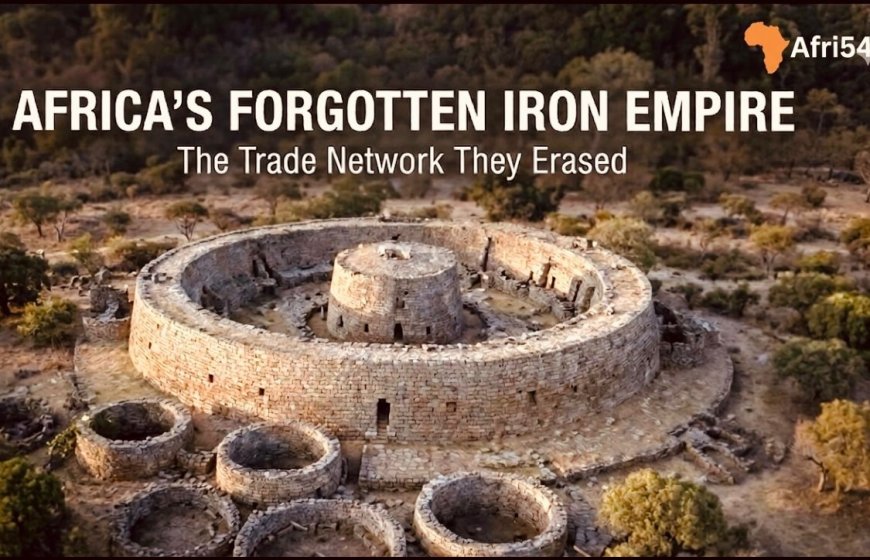
African's Forgotten Iron Empire
Across the vast expanse of African history lies a remarkable yet often overlooked story—one of innovation, industry, and ingenuity. Long before the Industrial Revolution reshaped Europe, parts of Africa had already mastered the art of iron production, building thriving societies around it.
 chijioke


Across the vast expanse of African history lies a remarkable yet often overlooked story—one of innovation, industry, and ingenuity. Long before the Industrial Revolution reshaped Europe, parts of Africa had already mastered the art of iron production, building thriving societies around it. These were not isolated achievements but the foundation of powerful, organized states—true iron empires whose legacies have faded from mainstream historical narratives.
The Dawn of Iron in Africa
Ironworking in Africa dates back over 2,500 years, with evidence suggesting that sub-Saharan Africans independently developed techniques for smelting iron ore. This was no minor feat. Iron production requires controlled high temperatures, specialized furnaces, and a deep understanding of materials—knowledge that African metallurgists refined over centuries.
Regions such as present-day Nigeria, Niger, and Central Africa became hubs of early iron technology. Communities were not only producing iron for tools and weapons but were also building entire economies and social systems around it.
The Rise of Iron-Based Societies
One of the most significant impacts of iron technology was agricultural expansion. Iron tools made it easier to clear forests and cultivate land, leading to population growth and the rise of complex societies. Iron weapons, on the other hand, provided military advantages, enabling certain groups to expand their territories and influence.
These developments gave rise to powerful states that can be described as “iron empires.” These societies were characterized by, Skilled blacksmiths who held high social status, Organized trade networks distributing iron goods, Political systems supported by control of resources, Cultural traditions deeply tied to metallurgy.


Iron was not just a material, it was a symbol of power, transformation, and spiritual significance.
The Nok Civilization: Pioneers of Iron
Among the earliest known ironworking cultures in West Africa was the Nok civilization. Flourishing between 1000 BCE and 300 CE, the Nok people are famous for their terracotta sculptures, but their contributions to iron technology are equally important.
Archaeological findings reveal advanced smelting furnaces and evidence of large-scale iron production. This suggests a highly organized society capable of coordinating labor and resources—traits associated with early state formation.
Beyond Nok: Expanding Iron Traditions
Following the Nok, other societies continued to develop and refine ironworking techniques. Across West and Central Africa, iron production became increasingly sophisticated.
In regions like the Lake Chad basin and the forests of Central Africa, communities built durable furnaces capable of reaching extremely high temperatures. Some techniques were so efficient that modern researchers have studied them for insights into sustainable metallurgy.


These iron-producing societies traded widely, exchanging tools, weapons, and other goods across vast distances. Iron became a cornerstone of regional economies and a driver of cultural exchange.
The Spiritual and Cultural Power of Iron
In many African societies, blacksmiths were more than craftsmen—they were revered figures. The process of transforming raw earth into usable metal was often seen as mystical, linking blacksmiths to spiritual forces.
Iron itself held symbolic meaning. It represented strength, resilience, and transformation. Rituals, myths, and traditions grew around its production and use, embedding metallurgy deeply into cultural identity.
Why These Empires Were Forgotten
Despite their significance, Africa’s iron empires are largely absent from global historical discourse. Several factors contribute to this:
- Oral Traditions: Much of African history was passed down orally, making it less visible to early Western historians who prioritized written records.
2. Colonial Narratives: Colonial-era scholarship often downplayed or ignored African technological achievements.
3. Archaeological Gaps: Many sites remain under-researched due to limited funding and resources.
As a result, the story of Africa’s iron mastery has been overshadowed, despite its global importance.
Reclaiming the Narrative
Today, historians and archaeologists are working to bring these stories back into the spotlight. New discoveries continue to challenge outdated assumptions, revealing the depth and complexity of Africa’s technological past.
Understanding Africa’s iron empires is not just about correcting the historical record—it’s about recognizing the continent’s role in shaping human progress. These societies were innovators, engineers, and visionaries whose contributions deserve global recognition.
Conclusion
Africa’s forgotten iron empires stand as a testament to human ingenuity and resilience. They remind us that technological advancement is not confined to any one region or civilization. Long before the world acknowledged it, African societies were forging the tools, systems, and ideas that would shape their future.
Revisiting this history is more than an academic exercise—it is an act of rediscovery, restoring a vital chapter of humanity’s shared story.