

Toward a Unified African Currency: Mahama Pushes for Financial Integration
At the African Union summit in Addis Ababa, Ghana President John Mahama called for a Pan-African payment system to reduce reliance on the U.S. dollar and strengthen the African Continental Free Trade Area (AfCFTA). Discover how a unified currency could boost intra-African trade and economic sovereignty.
 Afri54
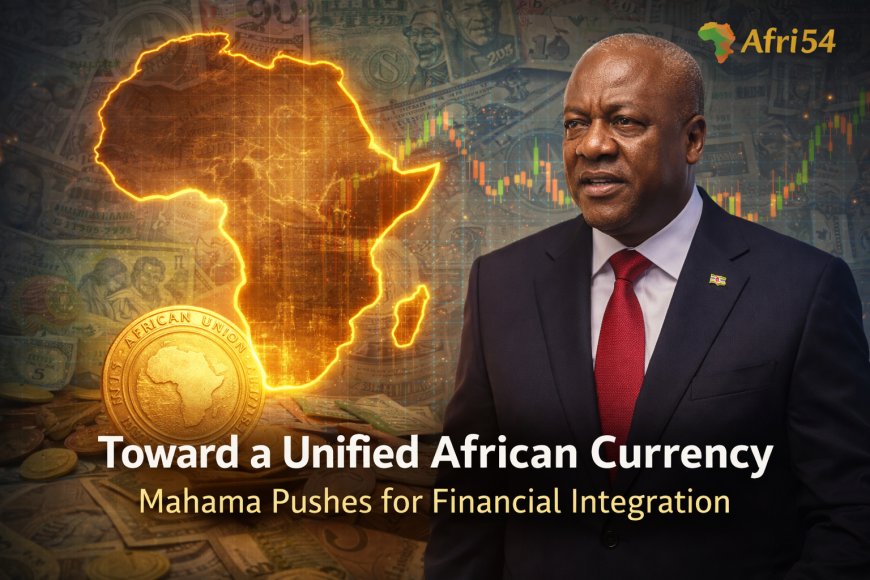


At the recent African Union summit in Addis Ababa, Ghana’s President, John Mahama, made a strong case for accelerating the creation of a Pan-African payment system. His message was clear: Africa cannot achieve meaningful economic integration while continuing to depend heavily on foreign currencies—especially the U.S. dollar—for trade among its own countries.
Mahama emphasized that African nations trading with one another in dollars or euros creates unnecessary costs, delays, and vulnerabilities. Instead of settling transactions in local currencies like the cedi, naira, rand, or shilling, many African businesses must first convert their money into dollars. This double conversion increases transaction fees, exposes traders to exchange rate volatility, and drains scarce foreign reserves.
He argued that adopting a unified or interconnected African payment system would significantly strengthen the goals of the African Continental Free Trade Area (AfCFTA), which aims to create the largest free trade area in the world by number of participating countries. While AfCFTA reduces tariffs and trade barriers on paper, the continued reliance on foreign currencies undermines its full potential.
Why a Unified Currency or Pan-African Payment System Would Help Africa
Reduced Transaction Costs
When African countries trade using the U.S. dollar, businesses often face two conversion processes: local currency to dollar, and dollar to another local currency. Each conversion involves fees charged by banks and financial institutions. A unified payment system—or eventually a single African currency—would remove this duplication, making cross-border trade cheaper and faster.
Protection from External Shocks
African economies are highly vulnerable to fluctuations in global financial markets. When the dollar strengthens, African imports become more expensive, and debt servicing costs increase. By reducing reliance on foreign currencies, Africa would shield itself from external monetary policies and global financial instability.
Preservation of Foreign Reserves
Many African countries struggle with limited foreign exchange reserves. Using dollars for intra-African trade forces governments to maintain large reserves just to support trade within the continent. Trading in local currencies would conserve these reserves for critical imports such as machinery, medicine, and technology from outside Africa.
Stronger Intra-African Trade
Currently, trade among African countries accounts for a relatively small percentage of total trade compared to regions like Europe or Asia. A seamless payment system would make it easier for businesses in Nigeria to pay suppliers in Kenya, or manufacturers in Ghana to receive payment from South Africa, without complex banking hurdles. This convenience would naturally increase intra-African trade volumes.


Greater Economic Sovereignty
Relying on foreign currencies gives significant influence to external financial systems. Sanctions, global banking restrictions, or international financial crises can disrupt African trade even when the trade is entirely within Africa. A Pan-African system would strengthen economic independence and reduce exposure to external control.
Boost for SMEs and Digital Innovation
Small and medium-sized enterprises (SMEs) often struggle the most with cross-border payments due to high banking fees and documentation requirements. A continent-wide digital payment infrastructure could simplify transactions, encourage fintech growth, and integrate informal businesses into the formal economy.
Lessons from Other Regions
The success of the euro in the European Union demonstrates how a shared currency can deepen economic integration, though it also shows the need for strong fiscal coordination. Africa may not immediately adopt a single currency, but a structured, interoperable payment system could serve as a stepping stone toward deeper monetary cooperation.
Practical Steps Forward
Rather than jumping straight to a single currency, Africa could:
Expand existing regional payment systems.
Develop a centralized clearing mechanism for local currencies.


Strengthen cooperation between central banks.
Invest in secure, continent-wide digital financial infrastructure.
Conclusion
President Mahama’s call reflects a growing recognition that political unity must be matched with financial integration. If Africa is serious about unlocking the full potential of its free trade agreement, reducing poverty, and building resilient economies, reforming how the continent handles payments and currency exchange is essential.
A unified or well-coordinated Pan-African payment system would not only lower costs and increase trade but also represent a powerful step toward economic sovereignty and long-term continental prosperity.