

How M-Pesa Changed Kenya Forever
M-Pesa, launched in 2007 by Safaricom, emerged from a relatively modest concept: enabling people to transfer money using their mobile phones. Initially conceived as a way for microfinance borrowers to repay loans, the service quickly evolved into something much broader as users began to explore its potential for person-to-person transfers.
 chijioke
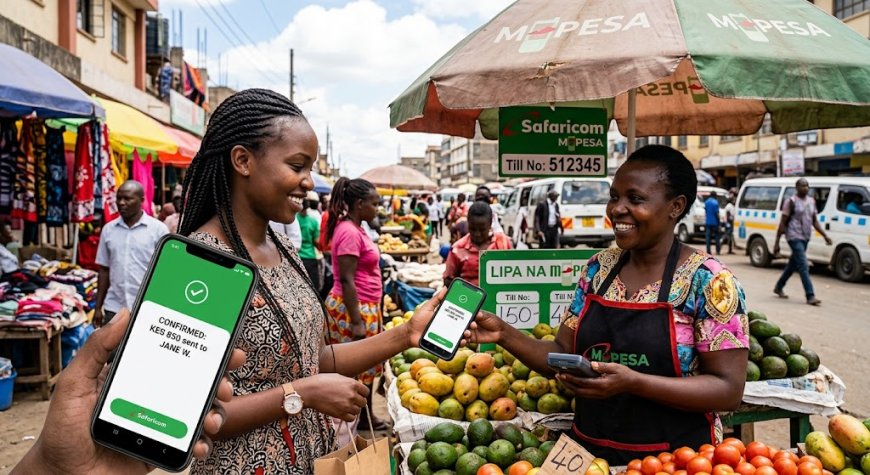


In the early 2000s, Kenya faced a financial paradox. While its economy showed promise and entrepreneurial spirit thrived across urban and rural communities, access to formal banking remained limited for a large portion of the population. Traditional banks were concentrated in cities, documentation requirements were restrictive, and transaction costs were often prohibitive. For millions of Kenyans, especially those in rural areas, sending or receiving money was slow, expensive, and insecure.
What followed was not just a technological innovation, but a financial revolution that would redefine how money moves—not only in Kenya, but across the world.
The Birth of a Simple but Powerful Idea
M-Pesa, launched in 2007 by Safaricom, emerged from a relatively modest concept: enabling people to transfer money using their mobile phones. Initially conceived as a way for microfinance borrowers to repay loans, the service quickly evolved into something much broader as users began to explore its potential for person-to-person transfers.
The genius of M-Pesa lay in its simplicity. Users could deposit cash with local agents, convert it into electronic value stored on their mobile phones, and send it instantly via SMS to anyone with a mobile number. Recipients could then withdraw cash from agents in their own locations. No bank account was required.


At a time when mobile phone penetration was rapidly increasing—even in underserved regions—this model proved to be perfectly aligned with Kenya’s socioeconomic realities.
Rapid Adoption and Cultural Shift
What truly set M-Pesa apart was how quickly it became embedded in everyday life. Within just a few years, millions of Kenyans adopted the platform. It was used not only for remittances but also for paying bills, buying goods, saving money, and even receiving salaries.
The service transformed social and economic relationships. Urban workers could send money home to their families instantly. Small business owners could transact without needing physical cash. Informal economies became more structured as digital records of transactions emerged.
Trust played a key role. The network of local agents—often small shop owners—created a human interface that made the system accessible and reliable. People were not just interacting with technology; they were engaging with familiar faces in their communities.
Financial Inclusion at an Unprecedented Scale
Before M-Pesa, a significant percentage of Kenya’s population was excluded from formal financial services. Within a decade of its launch, the country became a global leader in financial inclusion.


Millions of previously unbanked individuals gained access to a secure way of storing and transferring money. This had profound implications:
-
Poverty reduction: Easier access to financial tools helped households better manage emergencies and smooth income fluctuations.
-
Women’s empowerment: Women, particularly in rural areas, gained greater control over their finances.
-
Business growth: Entrepreneurs could operate more efficiently, reduce transaction risks, and expand their customer base.
Studies have shown that M-Pesa lifted a substantial number of households out of extreme poverty, particularly by enabling women to transition into business and retail activities.
Economic Transformation and Innovation Ecosystem
M-Pesa did more than solve a problem—it sparked an entire ecosystem of innovation. Fintech startups, mobile banking services, and digital payment platforms began to flourish in Kenya, positioning the country as a leader in mobile finance.
Banks, initially skeptical, adapted by integrating mobile money into their services. Partnerships between telecom companies and financial institutions became more common, blurring the lines between banking and telecommunications.
The ripple effects extended to sectors such as agriculture, healthcare, and education. Farmers could receive payments directly, healthcare providers could collect fees more efficiently, and schools could manage tuition payments digitally.
Global Influence and Replication
The success of M-Pesa did not go unnoticed. It became a case study for financial inclusion worldwide, inspiring similar mobile money systems in countries across Africa, Asia, and beyond.
However, replicating its success proved challenging. Kenya’s unique combination of high mobile penetration, limited banking infrastructure, and a supportive regulatory environment created the perfect conditions. In many other markets, these factors did not align as effectively.
Nevertheless, M-Pesa reshaped global thinking about what financial systems could look like in the digital age. It demonstrated that innovation does not always require complex technology—sometimes, it requires a deep understanding of people’s needs and behaviors.
Challenges and Criticisms
Despite its achievements, M-Pesa has not been without challenges. Concerns have been raised around market dominance, as Safaricom commands a significant share of the mobile money market in Kenya. Questions about competition, interoperability, and pricing have occasionally surfaced.
There are also ongoing discussions about data privacy, cybersecurity, and the need for continued regulatory oversight as the platform evolves.
Yet, these challenges are often viewed as signs of maturity rather than failure—indicators of a system that has grown large enough to require careful governance.
A Lasting Legacy
Today, M-Pesa is more than a payment system—it is a cornerstone of Kenya’s economic identity. It has fundamentally altered how people think about money, access financial services, and participate in the economy.
Its legacy lies not just in the numbers—millions of users, billions in transactions—but in the human stories it has enabled. Families staying connected, businesses thriving, and communities gaining resilience in the face of uncertainty.
Conclusion
The story of M-Pesa is a powerful reminder that transformative innovation often begins with a simple idea executed exceptionally well. By leveraging existing technology, understanding local needs, and building trust at the grassroots level, M-Pesa succeeded where many complex systems have failed.
In doing so, it didn’t just change Kenya—it offered a blueprint for inclusive finance in the 21st century.