

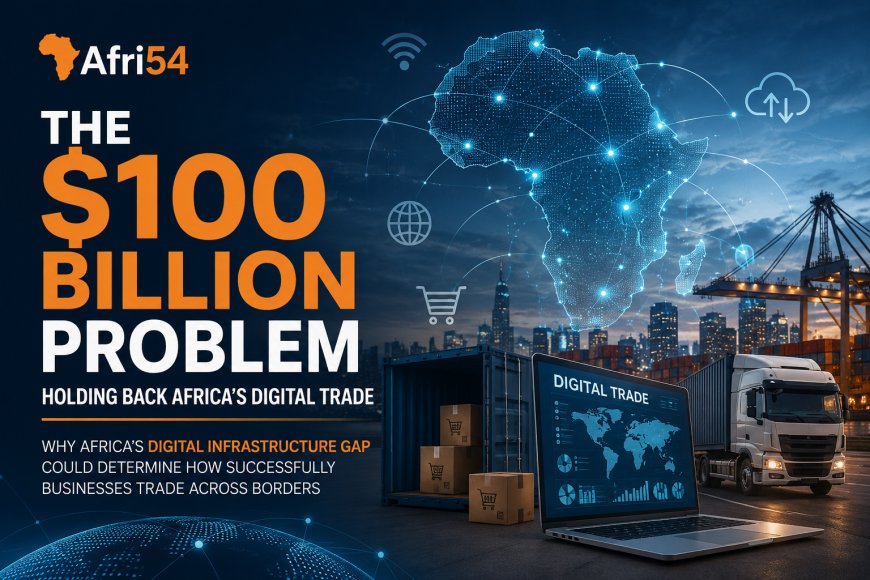
The $100 Billion Problem Holding Back Africa’s Digital Trade; Why Africa’s Digital Infrastructure Gap Could Determine How Successfully Businesses Trade Across Borders.
 chijioke


Africa is standing at the edge of one of the biggest economic opportunities of the 21st century. With a population exceeding 1.4 billion people, a rapidly growing middle class, increasing smartphone adoption, and the launch of the African Continental Free Trade Area (AfCFTA), the continent has the potential to create one of the world’s largest digital marketplaces.
Yet, despite this enormous promise, Africa is leaving billions of dollars on the table.
The problem is not a lack of entrepreneurs, innovative businesses, or market demand. From Lagos to Nairobi, Cairo to Cape Town, African businesses are creating products, offering services, and building digital solutions that could reach customers across borders. The challenge lies elsewhere: the continent’s digital infrastructure gap.
Experts estimate that Africa requires over $100 billion in infrastructure investment annually to meet its development needs. A significant portion of this shortfall affects the digital systems that enable modern trade—reliable internet access, digital payment networks, data centres, logistics technology, and cross-border digital regulations.
Until these foundations are strengthened, Africa’s vision of seamless digital trade may remain more aspiration than reality.


Understanding Digital Trade in Africa
Digital trade goes beyond online shopping. It includes every commercial activity enabled by technology—cross-border e-commerce, digital payments, online services, cloud computing, digital marketing, remote work, and technology-driven logistics.
A fashion entrepreneur in Nigeria selling products to customers in Kenya, a software developer in Ghana serving clients in South Africa, or a creative agency in Rwanda working with businesses in Egypt are all participating in digital trade.
The digital economy removes many traditional barriers to business. Geography matters less. Markets become larger. Small businesses gain access to customers far beyond their local communities.
However, digital trade depends on strong infrastructure. Without it, opportunities become difficult to access, expensive to pursue, and impossible to scale.
The Infrastructure Gap Slowing Africa Down
1. Unequal Internet Access
Internet access remains one of the greatest barriers to digital trade across Africa.


While urban centres in some countries enjoy relatively good connectivity, many rural and underserved areas still struggle with limited access, poor network quality, and expensive data costs.
For businesses, unreliable internet means interrupted transactions, reduced productivity, and difficulty engaging customers in different markets. For consumers, it creates a digital divide where millions remain excluded from online commerce.
Digital trade cannot thrive when access to the digital economy remains uneven.
2. Fragmented Payment Systems
Making payments across African borders can still be slow, costly, and complicated.
Businesses often face challenges such as currency conversion issues, high transaction fees, limited interoperability between payment platforms, and delays in settlement processes.
A small business in Senegal should be able to sell to a customer in Uganda as easily as a business in Europe sells across European markets. Yet, payment barriers continue to create friction that discourages cross-border transactions.
Progress is being made through initiatives that promote integrated payment systems, but much more investment and collaboration are needed.
3. Insufficient Data Infrastructure
Data centres, cloud services, and digital storage systems are essential components of a modern digital economy.
Many African businesses still rely on servers and infrastructure located outside the continent, increasing costs, slowing services, and raising concerns around data sovereignty.
Expanding local data centres and strengthening cloud infrastructure would improve business efficiency, reduce costs, and encourage greater digital innovation.
4. Logistics and Delivery Challenges
Digital trade does not end when an online payment is made. Physical goods must still move efficiently across borders.
Poor transport networks, customs delays, inadequate addressing systems, and fragmented logistics services increase delivery costs and reduce trust in cross-border commerce.
For Africa’s e-commerce sector to flourish, digital and physical infrastructure must develop together.
5. Regulatory Fragmentation
Africa consists of 54 countries, each with different regulations governing digital services, data protection, taxation, and online transactions.
For businesses seeking to expand across multiple markets, navigating these differences can be complex and costly.
The promise of AfCFTA lies not only in reducing tariffs but also in harmonising digital trade rules, creating a more unified market for African businesses.
Why This Matters for African Businesses
The digital infrastructure gap is not merely a technology issue—it is an economic issue.
Without strong digital systems:
-
Small businesses struggle to reach regional markets.
-
Startups face higher operational costs.
-
Cross-border transactions become slower and more expensive.
-
Investors become cautious.
-
Consumers lose trust in digital services.
Conversely, improved infrastructure can unlock new opportunities.
A more connected Africa could enable entrepreneurs to access millions of customers, allow businesses to scale beyond national borders, attract investment, and create jobs across multiple sectors.
Digital infrastructure is not simply about cables, towers, or data centres. It is about economic participation, competitiveness, and inclusive growth.
The Role of AfCFTA in Unlocking Digital Trade
The African Continental Free Trade Area offers a historic opportunity to transform how African businesses operate.
By creating a larger single market, reducing barriers, and promoting cooperation, AfCFTA has the potential to accelerate digital commerce across the continent.
However, trade agreements alone are not enough.
Policies must be supported by investments in broadband connectivity, digital payment systems, logistics networks, cybersecurity, data infrastructure, and digital skills.
Trade flows where infrastructure exists. Without the right digital foundations, even the best trade agreements will struggle to achieve their full impact.
The Road Ahead
Africa’s digital future will not be determined solely by innovation or entrepreneurial ambition. It will be determined by whether the continent can build the infrastructure needed to support seamless cross-border trade.
The entrepreneurs are ready. The markets are growing. The opportunities are enormous.
The question is whether Africa can bridge its digital infrastructure gap quickly enough to unlock the full potential of a connected continental economy.
The $100 billion challenge is significant, but so is the opportunity.
If Africa invests strategically in digital infrastructure today, the continent could become not only a participant in the global digital economy, but one of its most dynamic growth engines.
The future of African trade may not be defined by borders, but by bandwidth, connectivity, and the digital bridges that link businesses across the continent.
Africa is standing at the edge of one of the biggest economic opportunities of the 21st century. With a population exceeding 1.4 billion people, a rapidly growing middle class, increasing smartphone adoption, and the launch of the African Continental Free Trade Area (AfCFTA), the continent has the potential to create one of the world’s largest digital marketplaces.
Yet, despite this enormous promise, Africa is leaving billions of dollars on the table.
The problem is not a lack of entrepreneurs, innovative businesses, or market demand. From Lagos to Nairobi, Cairo to Cape Town, African businesses are creating products, offering services, and building digital solutions that could reach customers across borders. The challenge lies elsewhere: the continent’s digital infrastructure gap.
Experts estimate that Africa requires over $100 billion in infrastructure investment annually to meet its development needs. A significant portion of this shortfall affects the digital systems that enable modern trade—reliable internet access, digital payment networks, data centres, logistics technology, and cross-border digital regulations.
Until these foundations are strengthened, Africa’s vision of seamless digital trade may remain more aspiration than reality.
Understanding Digital Trade in Africa
Digital trade goes beyond online shopping. It includes every commercial activity enabled by technology—cross-border e-commerce, digital payments, online services, cloud computing, digital marketing, remote work, and technology-driven logistics.
A fashion entrepreneur in Nigeria selling products to customers in Kenya, a software developer in Ghana serving clients in South Africa, or a creative agency in Rwanda working with businesses in Egypt are all participating in digital trade.
The digital economy removes many traditional barriers to business. Geography matters less. Markets become larger. Small businesses gain access to customers far beyond their local communities.
However, digital trade depends on strong infrastructure. Without it, opportunities become difficult to access, expensive to pursue, and impossible to scale.
The Infrastructure Gap Slowing Africa Down
1. Unequal Internet Access
Internet access remains one of the greatest barriers to digital trade across Africa.
While urban centres in some countries enjoy relatively good connectivity, many rural and underserved areas still struggle with limited access, poor network quality, and expensive data costs.
For businesses, unreliable internet means interrupted transactions, reduced productivity, and difficulty engaging customers in different markets. For consumers, it creates a digital divide where millions remain excluded from online commerce.
Digital trade cannot thrive when access to the digital economy remains uneven.
2. Fragmented Payment Systems
Making payments across African borders can still be slow, costly, and complicated.
Businesses often face challenges such as currency conversion issues, high transaction fees, limited interoperability between payment platforms, and delays in settlement processes.
A small business in Senegal should be able to sell to a customer in Uganda as easily as a business in Europe sells across European markets. Yet, payment barriers continue to create friction that discourages cross-border transactions.
Progress is being made through initiatives that promote integrated payment systems, but much more investment and collaboration are needed.
3. Insufficient Data Infrastructure
Data centres, cloud services, and digital storage systems are essential components of a modern digital economy.
Many African businesses still rely on servers and infrastructure located outside the continent, increasing costs, slowing services, and raising concerns around data sovereignty.
Expanding local data centres and strengthening cloud infrastructure would improve business efficiency, reduce costs, and encourage greater digital innovation.
4. Logistics and Delivery Challenges
Digital trade does not end when an online payment is made. Physical goods must still move efficiently across borders.
Poor transport networks, customs delays, inadequate addressing systems, and fragmented logistics services increase delivery costs and reduce trust in cross-border commerce.
For Africa’s e-commerce sector to flourish, digital and physical infrastructure must develop together.
5. Regulatory Fragmentation
Africa consists of 54 countries, each with different regulations governing digital services, data protection, taxation, and online transactions.
For businesses seeking to expand across multiple markets, navigating these differences can be complex and costly.
The promise of AfCFTA lies not only in reducing tariffs but also in harmonising digital trade rules, creating a more unified market for African businesses.
Why This Matters for African Businesses
The digital infrastructure gap is not merely a technology issue—it is an economic issue.
Without strong digital systems:
-
Small businesses struggle to reach regional markets.
-
Startups face higher operational costs.
-
Cross-border transactions become slower and more expensive.
-
Investors become cautious.
-
Consumers lose trust in digital services.
Conversely, improved infrastructure can unlock new opportunities.
A more connected Africa could enable entrepreneurs to access millions of customers, allow businesses to scale beyond national borders, attract investment, and create jobs across multiple sectors.
Digital infrastructure is not simply about cables, towers, or data centres. It is about economic participation, competitiveness, and inclusive growth.
The Role of AfCFTA in Unlocking Digital Trade
The African Continental Free Trade Area offers a historic opportunity to transform how African businesses operate.
By creating a larger single market, reducing barriers, and promoting cooperation, AfCFTA has the potential to accelerate digital commerce across the continent.
However, trade agreements alone are not enough.
Policies must be supported by investments in broadband connectivity, digital payment systems, logistics networks, cybersecurity, data infrastructure, and digital skills.
Trade flows where infrastructure exists. Without the right digital foundations, even the best trade agreements will struggle to achieve their full impact.
The Road Ahead
Africa’s digital future will not be determined solely by innovation or entrepreneurial ambition. It will be determined by whether the continent can build the infrastructure needed to support seamless cross-border trade.
The entrepreneurs are ready. The markets are growing. The opportunities are enormous.
The question is whether Africa can bridge its digital infrastructure gap quickly enough to unlock the full potential of a connected continental economy.
The $100 billion challenge is significant, but so is the opportunity.
If Africa invests strategically in digital infrastructure today, the continent could become not only a participant in the global digital economy, but one of its most dynamic growth engines.
The future of African trade may not be defined by borders, but by bandwidth, connectivity, and the digital bridges that link businesses across the continent.
Africa is standing at the edge of one of the biggest economic opportunities of the 21st century. With a population exceeding 1.4 billion people, a rapidly growing middle class, increasing smartphone adoption, and the launch of the African Continental Free Trade Area (AfCFTA), the continent has the potential to create one of the world’s largest digital marketplaces.
Yet, despite this enormous promise, Africa is leaving billions of dollars on the table.
The problem is not a lack of entrepreneurs, innovative businesses, or market demand. From Lagos to Nairobi, Cairo to Cape Town, African businesses are creating products, offering services, and building digital solutions that could reach customers across borders. The challenge lies elsewhere: the continent’s digital infrastructure gap.
Experts estimate that Africa requires over $100 billion in infrastructure investment annually to meet its development needs. A significant portion of this shortfall affects the digital systems that enable modern trade—reliable internet access, digital payment networks, data centres, logistics technology, and cross-border digital regulations.
Until these foundations are strengthened, Africa’s vision of seamless digital trade may remain more aspiration than reality.
Understanding Digital Trade in Africa
Digital trade goes beyond online shopping. It includes every commercial activity enabled by technology—cross-border e-commerce, digital payments, online services, cloud computing, digital marketing, remote work, and technology-driven logistics.
A fashion entrepreneur in Nigeria selling products to customers in Kenya, a software developer in Ghana serving clients in South Africa, or a creative agency in Rwanda working with businesses in Egypt are all participating in digital trade.
The digital economy removes many traditional barriers to business. Geography matters less. Markets become larger. Small businesses gain access to customers far beyond their local communities.
However, digital trade depends on strong infrastructure. Without it, opportunities become difficult to access, expensive to pursue, and impossible to scale.
The Infrastructure Gap Slowing Africa Down
1. Unequal Internet Access
Internet access remains one of the greatest barriers to digital trade across Africa.
While urban centres in some countries enjoy relatively good connectivity, many rural and underserved areas still struggle with limited access, poor network quality, and expensive data costs.
For businesses, unreliable internet means interrupted transactions, reduced productivity, and difficulty engaging customers in different markets. For consumers, it creates a digital divide where millions remain excluded from online commerce.
Digital trade cannot thrive when access to the digital economy remains uneven.
2. Fragmented Payment Systems
Making payments across African borders can still be slow, costly, and complicated.
Businesses often face challenges such as currency conversion issues, high transaction fees, limited interoperability between payment platforms, and delays in settlement processes.
A small business in Senegal should be able to sell to a customer in Uganda as easily as a business in Europe sells across European markets. Yet, payment barriers continue to create friction that discourages cross-border transactions.
Progress is being made through initiatives that promote integrated payment systems, but much more investment and collaboration are needed.
3. Insufficient Data Infrastructure
Data centres, cloud services, and digital storage systems are essential components of a modern digital economy.
Many African businesses still rely on servers and infrastructure located outside the continent, increasing costs, slowing services, and raising concerns around data sovereignty.
Expanding local data centres and strengthening cloud infrastructure would improve business efficiency, reduce costs, and encourage greater digital innovation.
4. Logistics and Delivery Challenges
Digital trade does not end when an online payment is made. Physical goods must still move efficiently across borders.
Poor transport networks, customs delays, inadequate addressing systems, and fragmented logistics services increase delivery costs and reduce trust in cross-border commerce.
For Africa’s e-commerce sector to flourish, digital and physical infrastructure must develop together.
5. Regulatory Fragmentation
Africa consists of 54 countries, each with different regulations governing digital services, data protection, taxation, and online transactions.
For businesses seeking to expand across multiple markets, navigating these differences can be complex and costly.
The promise of AfCFTA lies not only in reducing tariffs but also in harmonising digital trade rules, creating a more unified market for African businesses.
Why This Matters for African Businesses
The digital infrastructure gap is not merely a technology issue—it is an economic issue.
Without strong digital systems:
-
Small businesses struggle to reach regional markets.
-
Startups face higher operational costs.
-
Cross-border transactions become slower and more expensive.
-
Investors become cautious.
-
Consumers lose trust in digital services.
Conversely, improved infrastructure can unlock new opportunities.
A more connected Africa could enable entrepreneurs to access millions of customers, allow businesses to scale beyond national borders, attract investment, and create jobs across multiple sectors.
Digital infrastructure is not simply about cables, towers, or data centres. It is about economic participation, competitiveness, and inclusive growth.
The Role of AfCFTA in Unlocking Digital Trade
The African Continental Free Trade Area offers a historic opportunity to transform how African businesses operate.
By creating a larger single market, reducing barriers, and promoting cooperation, AfCFTA has the potential to accelerate digital commerce across the continent.
However, trade agreements alone are not enough.
Policies must be supported by investments in broadband connectivity, digital payment systems, logistics networks, cybersecurity, data infrastructure, and digital skills.
Trade flows where infrastructure exists. Without the right digital foundations, even the best trade agreements will struggle to achieve their full impact.
The Road Ahead
Africa’s digital future will not be determined solely by innovation or entrepreneurial ambition. It will be determined by whether the continent can build the infrastructure needed to support seamless cross-border trade.
The entrepreneurs are ready. The markets are growing. The opportunities are enormous.
The question is whether Africa can bridge its digital infrastructure gap quickly enough to unlock the full potential of a connected continental economy.
The $100 billion challenge is significant, but so is the opportunity.
If Africa invests strategically in digital infrastructure today, the continent could become not only a participant in the global digital economy, but one of its most dynamic growth engines.
The future of African trade may not be defined by borders, but by bandwidth, connectivity, and the digital bridges that link businesses across the continent.