

Djenne Mosque (Mali) – The World’s Largest Mud-Brick Building
Discover the Djenne Mosque in Mali, the world’s largest mud-brick building and a UNESCO World Heritage site. Explore its history, architecture, and cultural significance as a symbol of African craftsmanship and Islamic heritage.
 Afri54
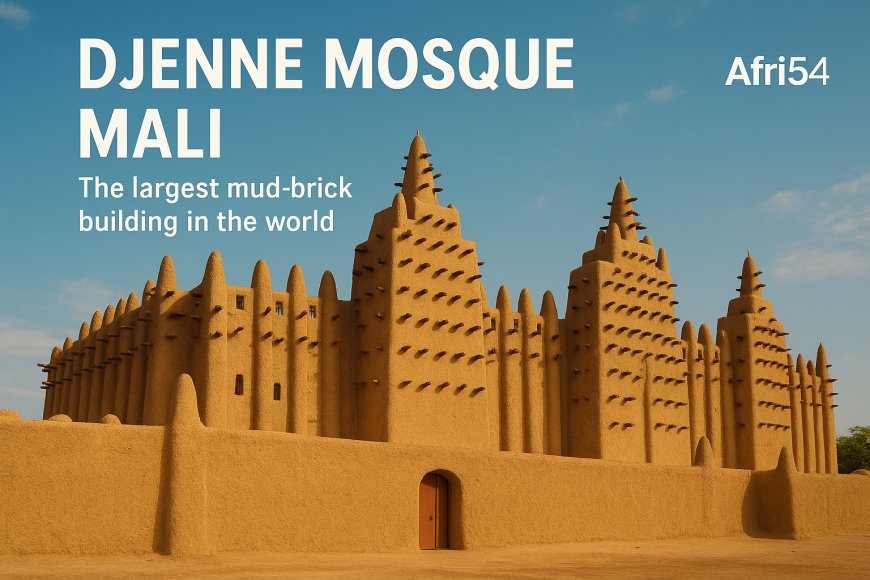


The Majestic Djenne Mosque: A Masterpiece of Mud and Faith
In the heart of Mali’s ancient city of Djenné stands one of Africa’s most iconic landmarks — the Great Mosque of Djenné. This architectural masterpiece isn’t just the largest mud-brick building in the world; it’s also a timeless symbol of African creativity, Islamic devotion, and sustainable construction.
Built originally around the 13th century, the mosque embodies the rich history of the Mali Empire — an era when Djenné was a thriving hub of trade, learning, and Islamic scholarship. The version seen today was rebuilt in 1907, preserving the essence of the original while blending traditional Sudano-Sahelian design elements.
A Marvel of Earth and Architecture
What sets the Djenne Mosque apart is its construction material — sun-baked mud bricks (called “ferey”) coated with a smooth layer of mud plaster. The result is a natural cooling system that keeps the interiors comfortable even in Mali’s intense heat.
Its walls are supported by wooden beams that stick out from the façade, serving both as decoration and practical scaffolding. These beams play a crucial role during the mosque’s famous annual replastering festival, when the entire community gathers to repair and renew the structure after the rainy season.
A Cultural and Religious Beacon
The Djenne Mosque isn’t just a building — it’s the beating heart of a community. Every Friday, hundreds of worshippers gather here for prayers, while tourists and historians from across the world come to marvel at its grandeur.


In 1988, UNESCO recognized the mosque and the Old Town of Djenné as a World Heritage Site, highlighting its cultural importance and unique architectural style that continues to inspire eco-friendly construction around the world.
Preserving a Living Legacy
Unlike modern concrete monuments, the Djenne Mosque is alive — constantly maintained by the hands of local masons who inherit the skill through generations. This tradition keeps both the structure and the community spirit strong.
The annual replastering is more than maintenance; it’s a festival of unity, where men, women, and children all play a part. It symbolizes Mali’s enduring respect for heritage, collaboration, and faith.
Visiting the Djenne Mosque
Visitors are captivated by the mosque’s towering minarets, elegant symmetry, and earthy tones that blend perfectly with the surrounding Sahel landscape. Although non-Muslims are not allowed inside the mosque, its exterior alone offers an unforgettable sight — a masterpiece rising proudly from Mali’s golden sands.
A trip to Djenné is a journey into Africa’s architectural genius and the living soul of Mali’s past and present.


Conclusion
The Djenne Mosque stands as a shining example of how tradition, religion, and community can shape timeless beauty. Built from earth and maintained by faith, it reminds the world that true grandeur doesn’t always come from stone or steel — sometimes, it comes from mud and heart.